Enter your email for a chance at
$1000
to use in the Special Learning Store!!
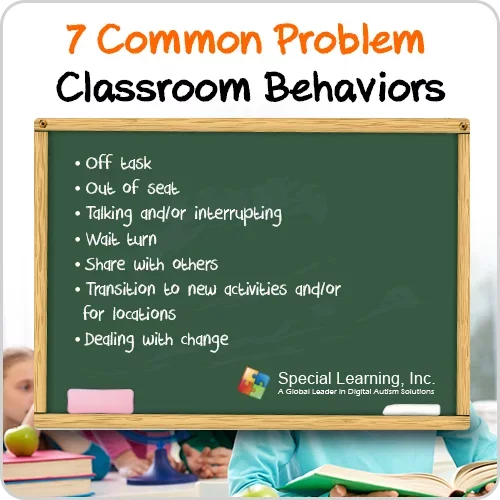
For school teams examining participation during lessons, turn-taking and transitions, this introductory recording examines assessment, reinforcement programs and visual supports through classroom examples. The catalogue attributes it to Michele LaMarche, while the session itself leaves the presenter unnamed.
Catalogue presenter credit: Michele LaMarche.
MANDATORY DISCLAIMER: The Behavior Analyst Certification Board (“BACB”) does not sponsor, approve, or endorse Special Learning, the materials, information, or sessions identified herein.
The presenter examines baseline skills, behavior and motivation, environmental and task variables, and current classroom strategies. The BACS consultation model includes a consultant's own treatment evaluation before teacher training.
Classroom demonstrations illustrate behavioral contracts, choices within schedules, visual rules and self-management systems. The presenter discusses peer pressure in group contingencies and cautions about everyone losing a reward because of one child's behavior.
Recording context: The recording dates to 2012 and presents an introductory overview, with an explicit evidence caveat about social stories.
The six-item evaluation mean was 4.20/5 across 43 complete responses, from 327 recorded rating responses. This mean includes only complete six-score responses. Source: Special Learning's course evaluation records, snapshot October 11, 2026.
Three selected anonymous responses appear below, with the wording and spelling retained. They describe learners' experiences and requests; they are not a guarantee of results.
Loved it very disciplined and structured and taught examples and vocabulary.
Course evaluation response, 2023
I like the examples and what to do in certain situations.
Course evaluation response, 2024
more bullet point visuals vs so much text
Course evaluation response, 2023